Every job below is one we do ourselves across Atwater.
We set footings below frost depth, which is overkill for Atwater's mild winters but keeps posts from heaving in our clay soil. Joists go in at 16 inches on center, tighter at 12 inches if you want composite decking or a hot tub on top.
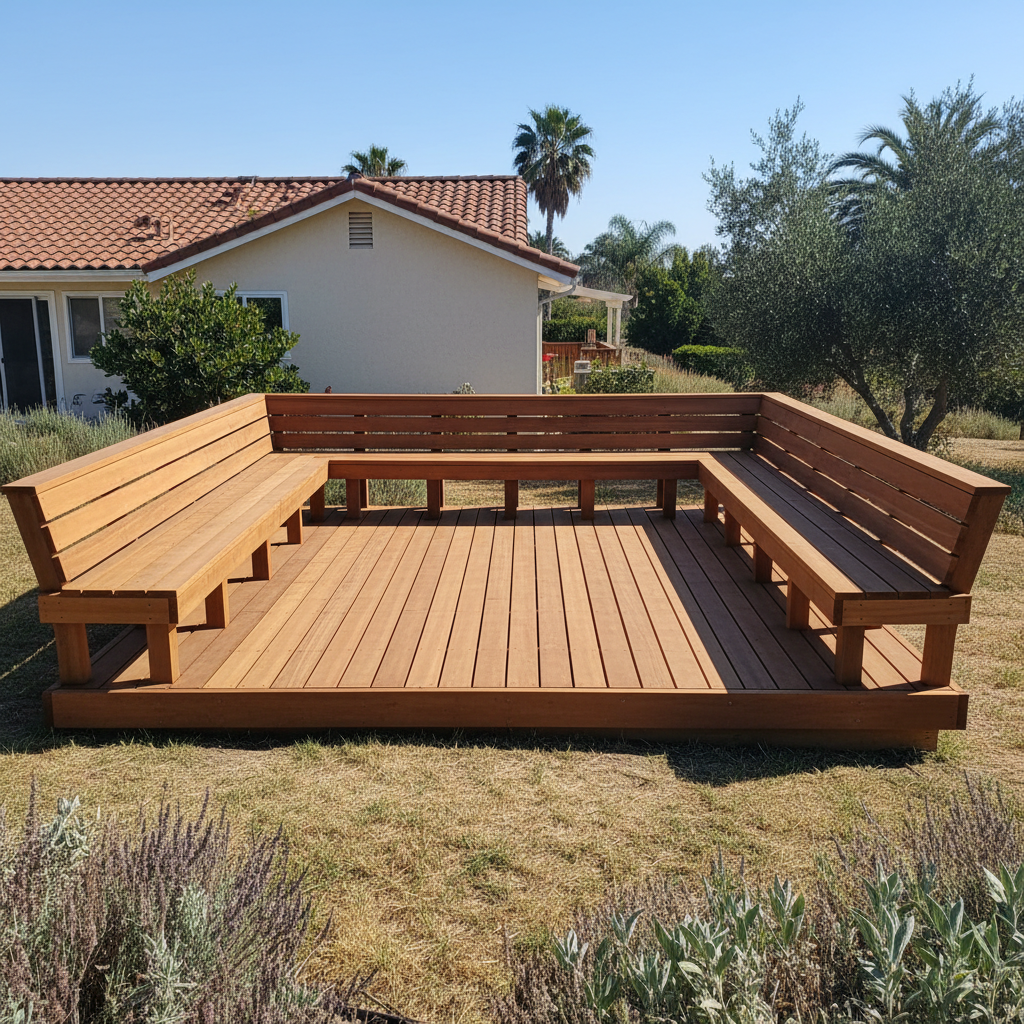
We'll draw the layout around how you actually use the yard, not a stock rectangle off a plan. Multi-level decks, built-in benches, a sunken fire pit area, we lay it out on paper first so you're not deciding on a railing height while we're already framing.
Soft boards, wobbly railings, ledger boards pulling away from the house, we see all three constantly in houses built here in the 80s and 90s. We replace what's rotted and check the flashing behind the ledger, because that's usually what let water in to begin with.
Composite boards don't warp or splinter, which matters when your deck sits in full sun from May through September. We still frame it in pressure-treated lumber underneath, since composite still sits on solid joists, it's not structural on its own.
A wood deck in Atwater takes a beating from UV, not rain, so the finish fails from the top down, not the edges. We pressure wash, let it dry a full day, then apply a penetrating stain instead of a film-forming one that'll just peel in a year.
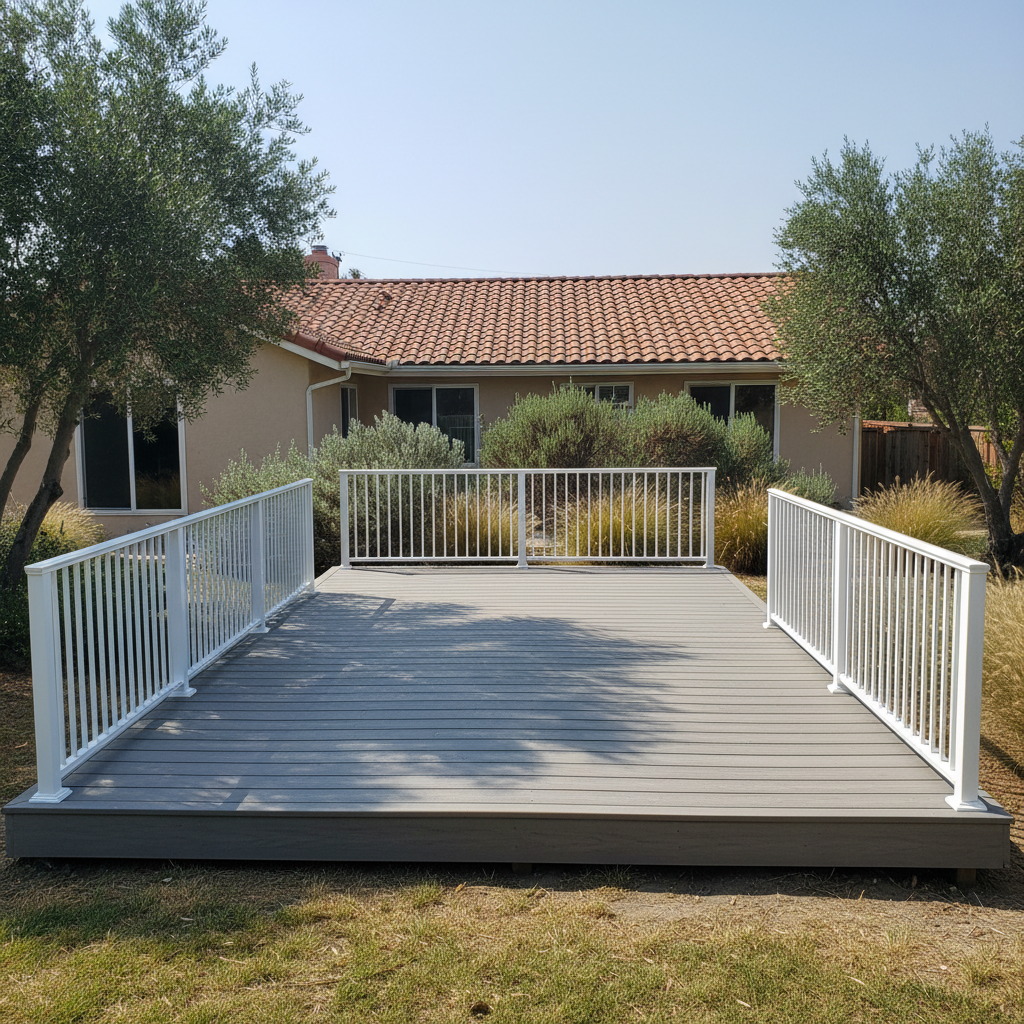
Code calls for 36 inches minimum and balusters spaced so a 4-inch sphere won't pass through, and we build to that whether it's a repair or new construction. Loose posts usually mean the lag bolts rusted or were never bolted to blocking in the first place.
If the frame is solid but the boards are cupped, splintered or just faded past saving, we strip the decking and leave the structure alone. It's half the cost of a full rebuild and the deck is usable again in two or three days.
Old deck comes out board by board, not with a sledgehammer through your flower bed. We check what's underneath too, because sometimes the old footings aren't where you'd expect, and that changes the new layout.
A bare deck in a Merced County summer is unusable by two in the afternoon, so a lot of our clients add a pergola or a solid roof over at least part of it. We frame it to carry real shade cloth or polycarbonate panels, not just rafters with nothing on them.
If a deck feels bouncy or one corner's sinking, the problem is usually a footing that was never poured below grade or a beam that's undersized for the span. We jack the deck, pour a proper footing, and swap the beam if it's not rated for the load it's carrying.
Four steps, and no surprises in any of them.
You tell us what you want doing, we look at what is actually there, and we ask the awkward questions early.
In writing, itemised, free. If something might add cost later we flag it now rather than at the end.
Same crew throughout. We cover your floors, keep the dust down and tidy up before we leave each day.
You point out anything you are not happy with and we fix it before the invoice, not after.
We bring the same crew and the same materials to every town on this list.
Questions that come up once a deck project actually gets underway.
Describe the problem and we will tell you what it probably is. No obligation.