
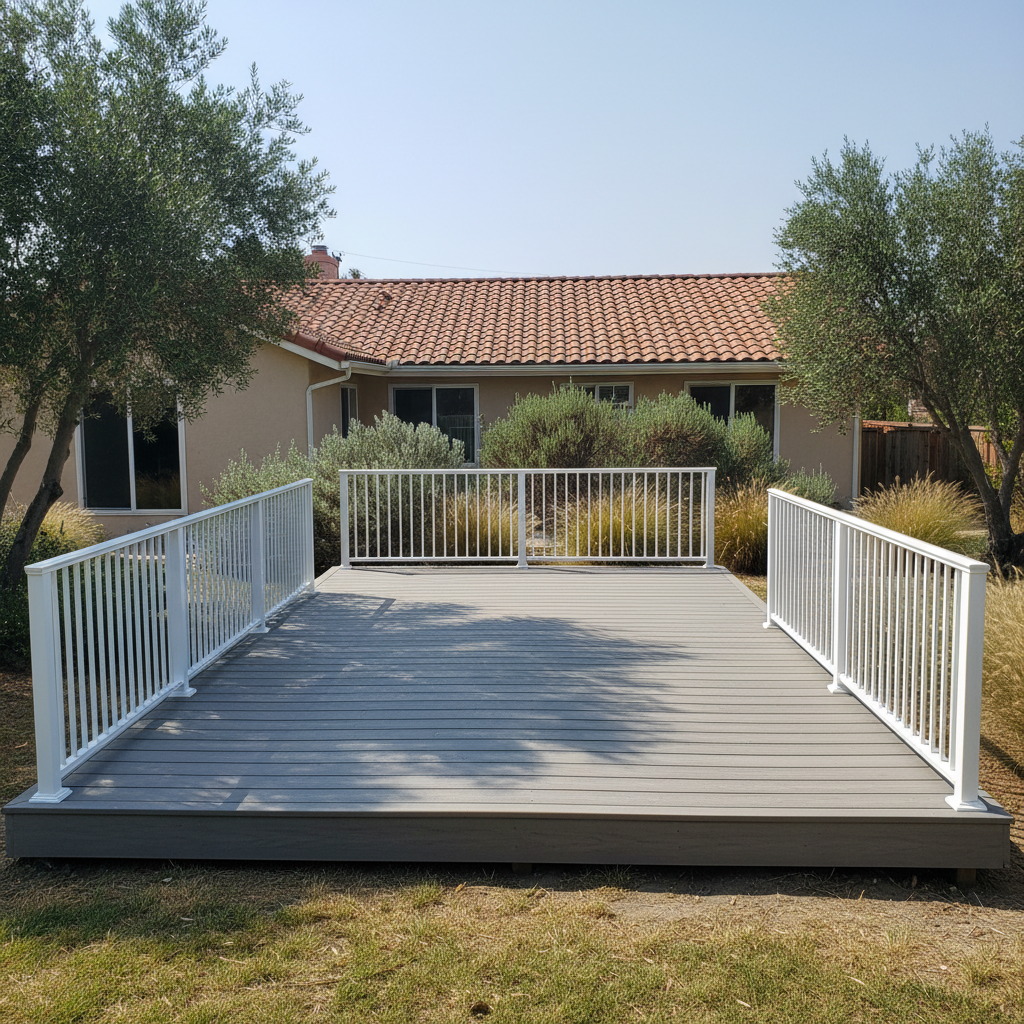
Most deck problems don't start with the boards. They start underground, where nobody looks until the deck is already wobbling. If you're picking a builder in Atwater, the question isn't really "do they build nice decks." It's "do they do the part you can't see correctly." Here's what that actually means and how to tell the difference before you sign a contract.
Ask about the footings before you ask about the decking
Merced County soil in most of Atwater and the surrounding valley towns is heavy clay or clay loam, old farmland in a lot of cases, and it moves. It swells when it's wet in January and shrinks hard when it bakes through a 105-degree July. A footing that isn't deep enough or wide enough will heave or settle unevenly over a few seasons, and you'll feel it as a bounce or a lean long before you see a crack. A builder who knows the ground here will dig footings in the 24 to 36 inch range depending on post spacing and load, not the 12-inch post-hole-digger special that works fine in sandy soil somewhere else. Ask them straight: how deep, how wide, and are they pouring concrete below the active clay zone or just into it. If they shrug, that's your answer.
Permits aren't optional, and skipping them costs you later
Any deck attached to the house, and most freestanding ones over 30 inches off the ground, need a permit through Merced County or the city depending on where the lot sits. The inspector is going to look at footing depth and size, the ledger board connection, joist spacing, and guardrail height if the deck is high enough to need one, generally 36 to 42 inches depending on the code cycle in effect. A contractor who tells you "we don't bother with permits, it just slows things down" is telling you they'll build something you can't legally sell the house with later, and that any insurance claim down the road gets complicated fast. Pulling a permit also means a second set of eyes checks the structure before it's buried under decking boards. That's worth more than any sales pitch.
The ledger board is where decks actually fail
If you want one thing to watch a crew do, watch how they attach the deck to the house. The ledger board, the piece bolted to your rim joist, is the single most common failure point in residential decks nationally, not just here. It needs through-bolts or lag screws, usually half-inch diameter, spaced about every 16 inches, and it needs flashing behind it so water doesn't track down between the ledger and the house siding. In the Central Valley, where subterranean termites are common and a wet ledger sits damp through the rainy months of November through March, a poorly flashed connection rots from the inside before you ever notice it from outside. Ask whether they're using self-adhering flashing tape or just caulk. Caulk is not flashing.
What the older neighborhoods need that the new ones don't
A deck job on a 1960s or 70s house near downtown Atwater is a different job than one on a newer build out toward Winton or along Bellevue Road. Older houses often have rim joists that have taken decades of moisture and sun, sometimes already softened at the band board, and a good builder checks that before bolting anything to it rather than assuming it's solid. Newer subdivisions usually have more predictable framing but tighter setbacks, and if there's an HOA involved, which is more common in the newer developments than the older streets, you'll want written approval before anything gets built, not after. A contractor who asks about your HOA unprompted has done this before.
Red flags that are easy to miss in a friendly sales visit
- A bid that's dramatically lower than two or three others, especially if it doesn't break out footing work, lumber grade, or hardware separately.
- No mention of flashing, at all, when you ask about the ledger.
- Pressure to skip the permit to save time or money.
- No general liability insurance or workers' comp they can show you on request. California requires it, and a roofer or deck crew without it leaves you holding the liability if someone gets hurt on your property.
- Vague answers on footing depth, like "we'll see what it needs once we dig." That's a reasonable thing to say about the last few inches. It's not reasonable as the whole answer.
Materials matter less than people think, timing matters more
Composite decking versus pressure-treated wood is mostly a budget and maintenance conversation, both hold up fine here if installed correctly. What matters more is when the work happens. Pouring concrete footings in the middle of a Central Valley heat wave, when daytime temps sit above 100 for weeks at a stretch, means the crew needs to manage cure time and keep the concrete from drying too fast and losing strength. Staining or sealing a deck right before the rainy season starts, instead of waiting for a dry stretch, means the sealer doesn't get the cure time it needs before it gets rained on. None of this is complicated, but it's the kind of detail that separates someone who schedules around the weather here from someone who just works off a calendar.
If you're interviewing builders, ask to see a deck they finished at least a year ago, not last month. A year of valley summer and winter will show you whether the boards cupped, whether the railing posts are still plumb, and whether the stain held its color. That tells you more than any photo of a freshly finished project. We've done our deck builder work across Atwater and the surrounding towns long enough to know which parts of this job you can rush and which parts you can't, and the footings are never the part you rush.